Physical Address
304 North Cardinal St.
Dorchester Center, MA 02124
Physical Address
304 North Cardinal St.
Dorchester Center, MA 02124

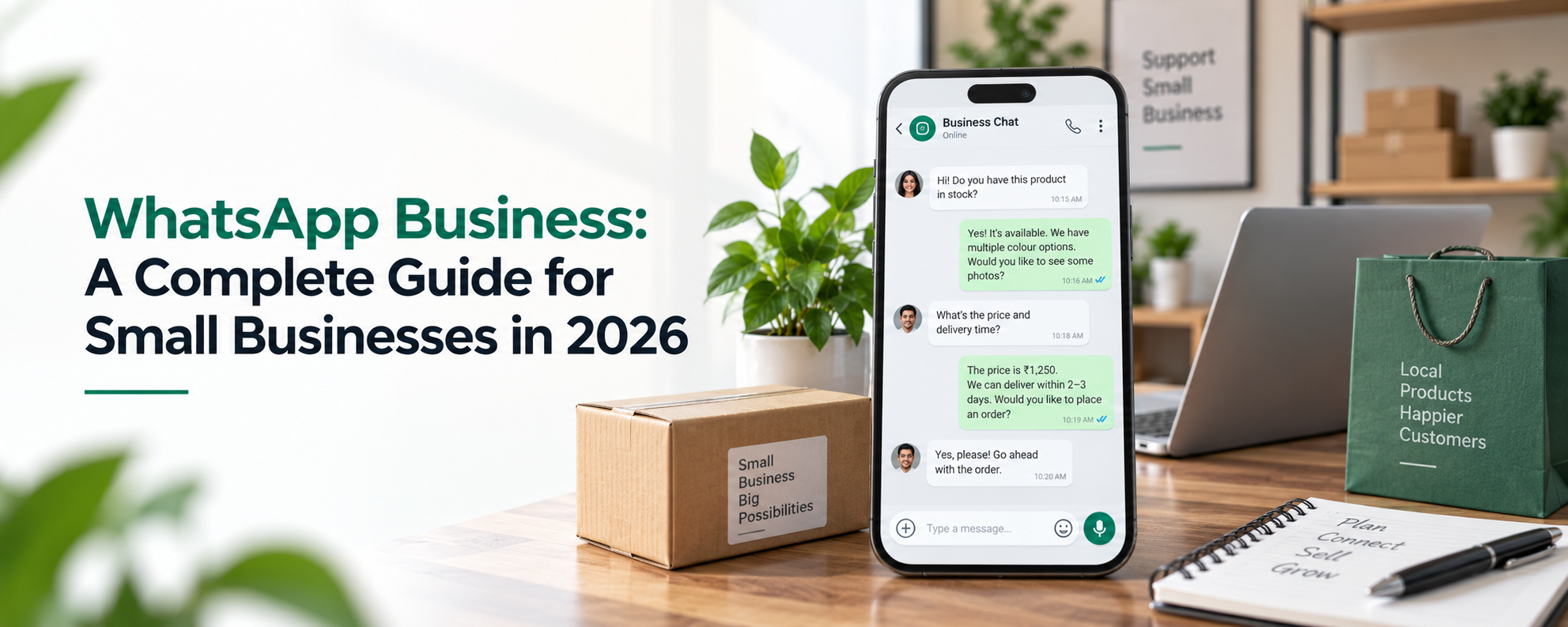
WhatsApp has become an important communication channel for businesses that want to connect with customers quickly and directly. From answering enquiries to sharing product information, confirming orders, and following up with leads, businesses can use WhatsApp at different stages of the customer journey.
For small businesses, the WhatsApp Business App can be a simple way to get started. As customer conversations and marketing requirements grow, businesses may also consider the WhatsApp Business API and more advanced WhatsApp business messaging solutions.
In this guide, we’ll explain how WhatsApp Business works, which features are useful for small businesses, when to consider the API, and how businesses can use WhatsApp effectively in 2026.
WhatsApp Business is designed specifically for businesses to communicate with their customers. Unlike the regular WhatsApp app, the WhatsApp Business App provides business-focused features that can help companies create a professional presence and manage customer conversations.
According to WhatsApp, the Business App is intended for small-to-medium-sized businesses and is available as a free app.
Businesses can use it to:
For a small business with a manageable number of conversations, these features can be enough to handle everyday customer communication.
One of the biggest advantages of WhatsApp is its direct communication experience.
Customers can contact a business without needing to make a phone call or send a traditional email. This can make it easier to ask questions, request information, or continue a conversation after discovering a product or service.
For businesses, WhatsApp can support several activities, including:
Customer Support: Answer questions and provide assistance through direct conversations.
Lead Follow-Up: Continue conversations with people who have shown interest in a product or service.
Product Communication: Share product details, images, catalogs, and relevant information.
Order and Service Updates: Communicate useful updates to customers where appropriate.
Marketing: Share relevant offers, announcements, and updates with customers who have opted in to receive communications.
The important point is that WhatsApp should not be treated simply as a channel for sending promotional messages. The best results usually come from providing useful and relevant communication.
The WhatsApp Business App includes several features that can make daily communication easier.
Business Profile
A business profile allows companies to present important information such as their business name, description, contact details, website, and other relevant information.
This helps customers understand who they are communicating with.
Quick Replies
Businesses often receive the same questions repeatedly. Quick replies can help save time by allowing businesses to respond to common questions more efficiently.
Labels
Labels can help businesses organize conversations based on different stages or categories, such as new enquiries, pending orders, follow-ups, or completed conversations.
Catalog
Eligible businesses can use catalogs to showcase products and services directly within WhatsApp.
Direct Customer Conversations
For small businesses, one of the biggest benefits is the ability to communicate directly with customers instead of relying only on traditional communication channels.
As a business grows, it may start asking an important question:
“Is the WhatsApp Business App still enough for us?”
The answer depends on the business’s communication requirements.
The WhatsApp Business App is generally suitable for businesses that handle a manageable volume of conversations and can manage most communication manually.
The WhatsApp Business API, which is part of the WhatsApp Business Platform, is designed for businesses that need more structured and scalable business messaging capabilities. WhatsApp’s current business policy covers both the WhatsApp Business App and the WhatsApp Business Platform, including WhatsApp Business APIs such as the Cloud API.
Businesses may consider the API when they need:
The API is therefore not necessarily a replacement that every small business needs immediately. It becomes more relevant when WhatsApp starts playing a larger role in sales, marketing, support, or operations.
When Should a Small Business Consider WhatsApp Business API?
There is no fixed customer count or business size at which every company must move to the API.
Instead, consider your daily communication requirements.
You may want to explore the WhatsApp Business API if:
If your current setup works well and your communication volume is manageable, there may be no immediate reason to change.
WhatsApp Message Marketing refers to using WhatsApp to communicate relevant marketing messages to customers and prospects.
Businesses can use WhatsApp marketing to share information such as:
However, effective WhatsApp marketing is not about sending as many messages as possible.
WhatsApp’s business messaging policies require businesses to have appropriate customer permission before contacting people and require businesses to respect requests to stop receiving communications. For Platform-initiated conversations, approved message templates are required where applicable.
Therefore, a successful WhatsApp marketing strategy should focus on permission, relevance, timing, and customer value.
A WhatsApp Marketing Platform is a business messaging solution that helps companies manage WhatsApp communication beyond basic one-to-one conversations.
Depending on the platform, businesses may use it for activities such as:
For a growing business, using a WhatsApp Marketing Platform can make it easier to organize WhatsApp communication as part of a broader digital marketing strategy.
The key is to choose a solution that works with the official WhatsApp Business Platform and follows applicable WhatsApp policies.
A good WhatsApp marketing strategy should start with the customer rather than the message.
Instead of asking, “How many people can we message?”, businesses should ask:
“What useful information can we provide to our customers?”
For example, an online store could share a new product announcement with customers who have opted in to receive such updates.
A service business could send relevant reminders or updates.
A local business could inform interested customers about a new service or seasonal offer.
This approach makes WhatsApp communication more useful and can create a better customer experience.
Businesses that want to communicate with a larger audience may consider WhatsApp Bulk Messaging for appropriate, opted-in business communication.
However, bulk messaging should never mean sending unsolicited messages to random phone numbers.
WhatsApp’s policies require businesses to obtain appropriate opt-in permission and respect customer requests to stop receiving messages. WhatsApp can also take action against accounts that repeatedly violate its policies.
For this reason, businesses should build their contact lists responsibly and send messages that are relevant to the audience.
As WhatsApp becomes a more important business communication channel, small businesses may need a more structured way to manage messaging.
ConnectFlow360 helps businesses use WhatsApp for scalable customer communication and marketing.
With ConnectFlow360, businesses can access capabilities such as:
This can help businesses move from basic manual communication toward a more organized WhatsApp messaging strategy.
The goal is not simply to send more messages. It is to make WhatsApp a more useful channel for customer engagement, marketing, lead generation, and business communication.
Whether you are using the WhatsApp Business App or a solution built around the WhatsApp Business Platform, following good messaging practices is important.
1. Get Customer Opt-In
Only communicate with customers who have provided appropriate permission to receive WhatsApp messages.
2. Send Relevant Messages
Avoid sending irrelevant promotions. Make sure your communication provides a clear reason for the customer to engage.
3. Respect Opt-Out Requests
If a customer asks to stop receiving messages, respect that request.
4. Avoid Excessive Messaging
Sending too many messages can create a poor customer experience and may increase the chances of customers blocking or reporting your business.
5. Use Clear Calls to Action
When appropriate, make it easy for customers to understand what they should do next, such as visiting a website, viewing a product, contacting your team, or completing another business action.
6. Follow WhatsApp Policies
WhatsApp’s business messaging policies apply to its Business App and Business Platform. Businesses should review the current policies and requirements before launching large-scale messaging campaigns.
The WhatsApp Business App is free to download and is designed for small-to-medium-sized businesses.
The Business App is designed for businesses that can manage customer communication more directly and manually. The WhatsApp Business API is part of the WhatsApp Business Platform and is better suited to businesses that need more scalable, automated, or integrated messaging.
A WhatsApp Marketing Platform is a business messaging solution that helps companies manage WhatsApp campaigns, customer communication, automation, and other messaging activities at a larger scale.
Yes. A business does not have to be a large enterprise to consider the API. It can be useful for small and growing businesses when their communication and automation requirements become more advanced.
Yes, WhatsApp can be a valuable marketing and customer communication channel when businesses use it responsibly, communicate with opted-in customers, and provide relevant information.
Businesses should define their audience, establish appropriate opt-in methods, create relevant messaging, plan customer journeys, and understand the applicable WhatsApp Business policies before launching campaigns.
WhatsApp Business can be a powerful communication tool for small businesses in 2026.
For businesses with manageable customer conversations, the WhatsApp Business App can provide a simple starting point. As communication becomes more complex, businesses may benefit from the WhatsApp Business API, a WhatsApp Marketing Platform, and more structured messaging workflows.
The most effective approach is not simply to send more WhatsApp messages. It is to use WhatsApp to create relevant, timely, and valuable customer conversations.
With the right strategy and tools such as ConnectFlow360, small businesses can turn WhatsApp from a basic communication channel into an important part of their marketing, sales, and customer engagement strategy.
🌐 Visit Website
💬 WhatsApp
📸 Instagram
📘 Facebook